In the dynamic world of building and construction, precision, safety, and expertise are paramount. Behind every towering structure and carefully placed component are skilled professionals who ensure everything moves into place flawlessly. Two such critical roles are Dogging and Rigging – foundational skills that remain in high demand and offer strong career pathways.
At IntoWork Australia, we understand the importance of equipping the next generation with the skills needed to thrive. Our nationally accredited training gives participants the hands-on experience and knowledge required to excel as a Dogman or Rigger.
Let’s dive into what these vital roles entail and why they may be your next career move!
What Exactly Is Dogging?
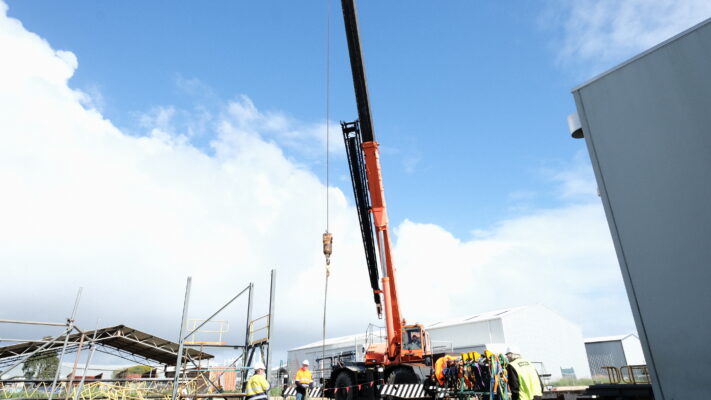
Dogging work is all about the safe and precise movement of loads using cranes and other lifting plant. It requires a keen eye, strong judgement, and a deep understanding of physics and safety protocols.
A Dogman (or Dogger) is responsible for:
- Selecting appropriate slinging methods and lifting gear: This includes considering the load’s size, shape, weight, and centre of gravity to determine the safest lifting method.
- Inspecting lifting gear: Before any lift, a Dogman inspects slings, hooks, cables, chains, and ropes to ensure they are free from defects and fit for use.
- Directing plant operators: When a load is out of the operator’s view, the Dogman becomes their eyes and ears, using hand signals, whistles, or two-way radios.
Anyone involved in slinging a load must hold a Dogging High Risk Work Licence (HRWL). This licence is obtained through a specialised Dogging training course. Riggers can also perform dogging work, as these units of competency are typically included within their rigging pathway.
For more detail, see:
What Is Dogging?
Beyond the Hook: Understanding Rigging
While Dogging focuses on load movement, Rigging covers a broader scope of work involving mechanical load-shifting equipment, placement of heavy components, and erecting/dismantling cranes or hoists.
Riggers are the architects of heavy lifting, ensuring stability, balance, and safe execution in complex construction environments.
To help future Riggers understand their pathway, here’s a breakdown of the licence tiers:
The Ladder of Expertise: Classes of Rigging Licences
- Basic Rigging (RB)
Prerequisite: Dogging licence or enrolment in a combined Dogging + Basic Rigging course.
Scope includes:
- All Dogging work
- Structural steel erection
- Hoists, static lines, mast climbers, safety nets
- Pre-cast concrete placement
- Perimeter screens, shutters, and cantilevered crane loading platforms
Learn more:
Which Class of Rigging Is Right for You?
- Intermediate Rigging (RI)
Prerequisite: Dogging + Basic Rigging licence.
Scope includes:
- All RB tasks
- Rigging of cranes, conveyors, excavators, tilt-slabs
- Dual lifts and demolition work
- Advanced Rigging (RA)
Prerequisite: Dogging + Basic + Intermediate Rigging licence.
Scope includes:
- All RI tasks
- Rigging of gin poles and shear legs
- Flying foxes, cableways, derricks
- Suspended and fabricated hung scaffolds
Why Upskill with a Rigging Course?
Rigging is classified as high-risk work, meaning anyone performing these tasks must hold a valid High Risk Work Licence (HRWL). This isn’t just legal compliance — it’s a commitment to safety and competency.
Demand for licensed Riggers is consistently strong across Australia. Western Australia alone accounts for 25.2% of all Riggers nationwide, showcasing the scale of career opportunities.
A Rigging or Dogging course is ideal if you want to:
- Boost your career prospects in a vital industry
- Gain highly sought-after skills for major infrastructure and construction projects
- Ensure safe and efficient lifting operations
- Follow a clear pathway from Dogging → Basic Rigging → Advanced Rigging
Ready to Elevate Your Career?
Explore Dogging and Rigging Training Courses with Nara Training and gain nationally recognised qualifications delivered by experienced industry professionals.